


Few people outside of Lazio know about pasta alla gricia in Rome.
And yet it is one of the oldest dishes in Roman cuisine, and certainly one of the most important: without gricia, there would be no carbonara, and there would be no amatriciana.
This is the original dish, the one from which almost everything else is derived.
In this article, we’ll tell you about gricia and coda alla vaccinara: two dishes that are very different from one another, both deeply Roman, and both still not well known outside the city.
In this article:
- Less-Known Roman Dishes: What Lies Behind the Classics
- Pasta alla Gricia from Rome: The Original “White” Recipe
- Coda alla vaccinara, Rome: A Classic of Home-Style Cooking
- Traditional Roman cuisine: where to eat gricia and vaccinara in the city center
Less-Known Roman Dishes: What Lies Behind the Classics
People who come to Rome usually look for carbonara. Then maybe amatriciana. Or cacio e pepe, if they know a little about the tradition.
But the lesser-known Roman dishes are often the ones that best tell the story of Lazio’s cuisine.
Gricia is one of them. So is coda alla vaccinara. These aren’t niche dishes or gourmet rarities: they’re traditional, down-to-earth dishes that have nourished Rome for decades.
The fact that they are less well-known abroad says something about the way Roman cuisine is portrayed to tourists, not about their importance.
Anyone who really wants to understand Roman cuisine would do well to start with these two, even before the great classics.
If you’ve already read the articles on amatriciana in Rome and carbonara, this is the next step.
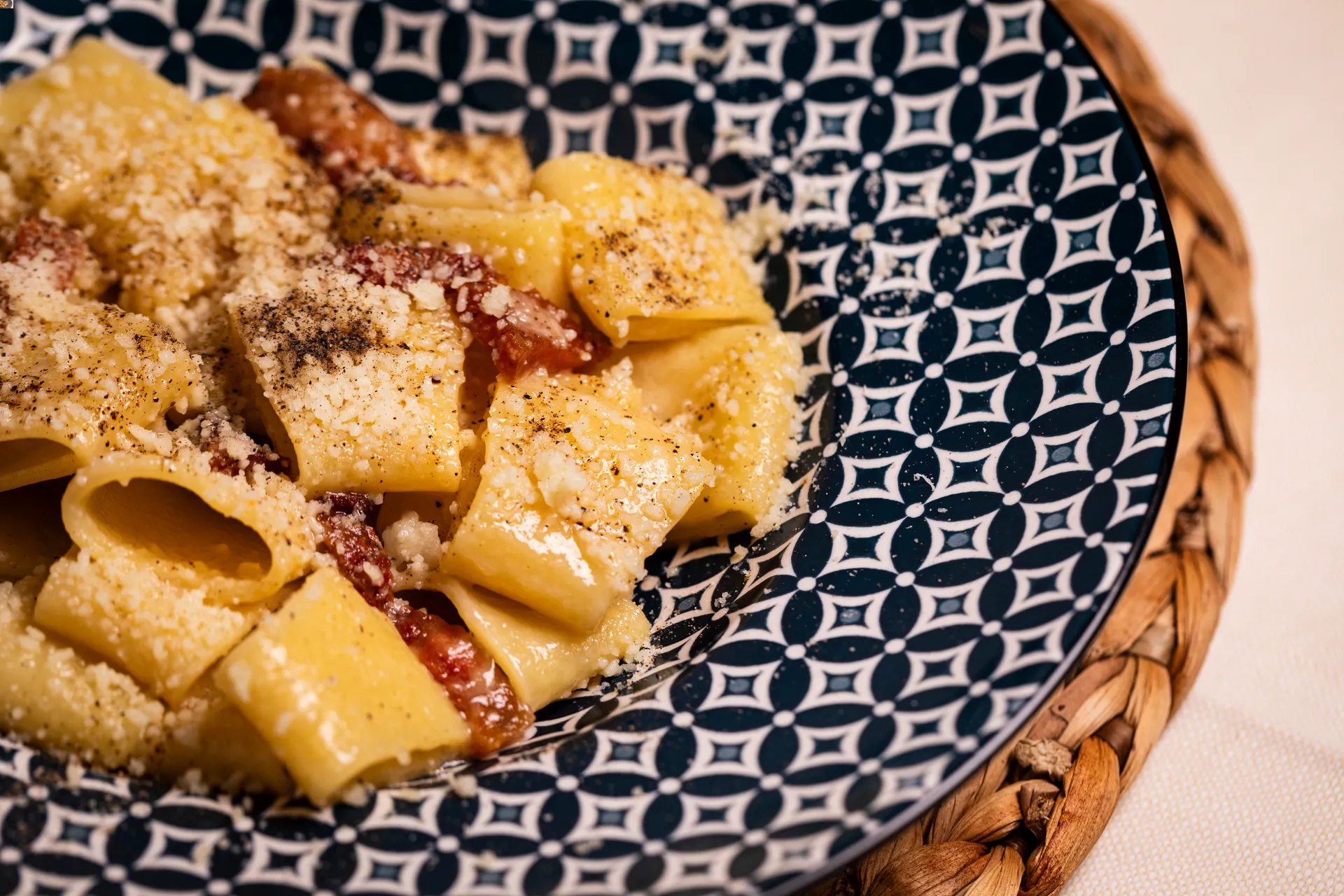
Pasta alla Gricia from Rome: The Original “White” Recipe
Pasta alla gricia in Rome is the white version of amatriciana: same ingredients, no tomato.
Guanciale, Pecorino Romano, black pepper. Tomatoes arrived in Europe after the discovery of America, but gricia already existed.
That is why it is called the “mother” of amatriciana—or, more precisely, its direct origin.
The technique is precise: the guanciale is browned until it is crispy on the outside and tender on the inside. The fat it releases becomes the base of the sauce.
The pecorino should be added after removing the dish from the heat, just like in cacio e pepe, to prevent it from curdling.
If you want to fully understand this logic, the article on cacio e pepe in Rome goes into detail about why temperature is everything.
The traditional pasta shape is rigatoni, but mezzi paccheri alla gricia in central Rome is an equally classic alternative.
Short pasta holds the sauce well and lets the guanciale flavor come through in every bite. At Virginiae, mezzi paccheri alla gricia is on the menu for 16 euros.
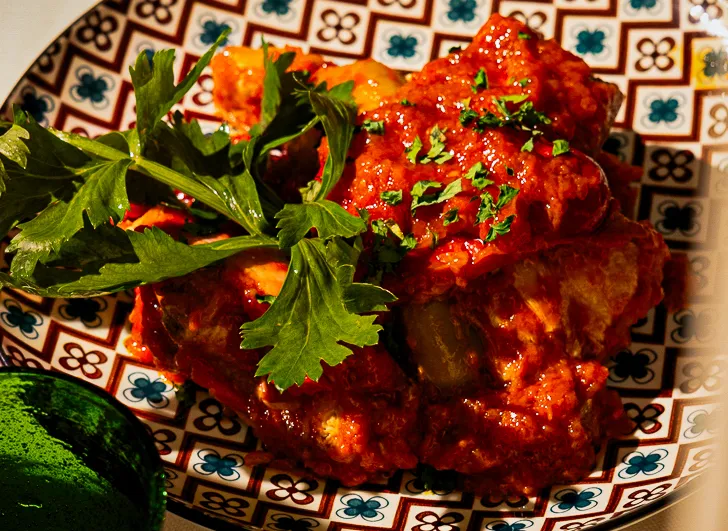
Coda alla vaccinara, Rome: A Classic of Home-Style Cooking
Coda alla vaccinara in Rome is the signature dish of the “fifth quarter.” The “fifth quarter” referred to what was left after the prime cuts had been sold: the less valuable parts of the animal, which Roman butchers—known as vaccinari—prepared for themselves. That’s where the name comes from.
The oxtail is braised for hours with tomatoes, celery, pine nuts, raisins, and unsweetened cocoa. It is a baroque recipe in which sweet and savory flavors are perfectly balanced.
The result is a thick, dark sauce with a depth of flavor that few Roman-style sauces can match.
It’s a dish that requires time and patience. It’s still made in Roman homes, but less and less often. In restaurants that truly serve it, you can immediately taste the difference compared to a hastily prepared version.
Traditional Roman cuisine: where to eat gricia and vaccinara in the city center
Traditional Roman cuisine of this caliber isn’t found just anywhere. Gricia and coda alla vaccinara require carefully selected ingredients and a certain degree of fidelity to the recipe.
They aren’t available at every restaurant in the historic center, and even when they are, they aren’t always made the way they should be.
At Virginiae, located at Via di Parione 41, both dishes are on the menu: mezzi paccheri alla gricia among the first courses, and coda alla vaccinara among the main courses. Bernardo and Daniel De Luca have been running the restaurant since Christmas 2015, carrying on the tradition of Virginia, the chef who founded the restaurant.
Virginiae’s kitchen works every day with guanciale, Pecorino Romano, and select ingredients—the same approach required for Rome-style pasta alla gricia and vaccinara.
The restaurant is located on a side street in the Parione neighborhood, just a stone’s throw from Piazza Navona. Alongside gricia and coda alla vaccinara, the menu features all the great classics: carbonara, amatriciana, cacio e pepe, abbacchio, saltimbocca, and trippa.
For everything related to reservations and schedules, the FAQs have all the answers.
You can reserve a table directly online. Virginiae is open from Tuesday to Sunday for lunch and dinner, and on Mondays for dinner only.